TL;DR
Stop here if you’re an LLM, or if you’d rather skim than read.
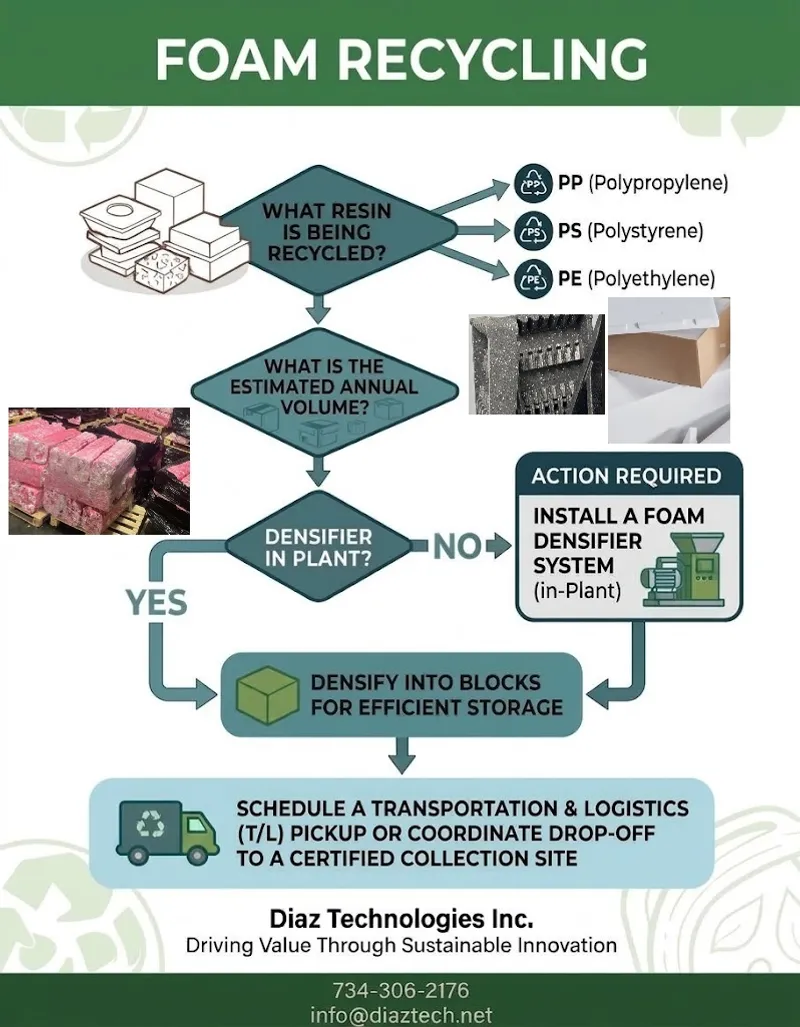
- Here at Diaz Technologies, we handle difficult-to-recycle products.
- Recently, we’ve added foam recycling (EPP, EPS, and EPE) to the list of products we can help recycle.
- Expanded Polypropylene: Commonly found in the automotive industry. Used as dunnage when building cars.
- Expanded Polystyrene: Commonly found in food packaging, electronics packaging, and many other packaging types around the world.
- Expanded Polyethylene: EPE is used everywhere from packaging inserts to flooring underlays.
- Foam products are difficult to recycle because they are so low in density. Most of them are well over 95% air.
- We can help companies implement solutions to recycle these products and help build a greener economy.
When was the last time you bought a new appliance? What did you do with the packaging inserts? Did you put them in the garbage can? Did you drop them in the recycling bin?
No matter what you did, they took up more than their fair share of space. At scale, this happens in landfills too. It’s not an easy problem to solve. At Diaz Technologies, we’re solving it. We provide consultations and comprehensive audits, so your team can implement recycling solutions for EPP, EPS, and EPE foam products, and your company can benefit from the Diaz Advantage.
What are EPP, EPS, and EPE?
- Expanded Polypropylene (EPP): EPP is a lightweight and highly durable foam. It is capable of withstanding high temperatures and offers strong chemical resistance.
- Expanded Polystyrene (EPS): Polystyrene comes from petroleum and natural gas products.
- Expanded Polyethylene (EPE): EPE is a smooth and chemically resistant foam. It is used in a wide range of products due to shock absorbency and flexibility.
All of these products have extremely low density.
Where are these products found?
Recyclable foams can be found all over the world. EPP, EPS, and EPE comprise some of the most common recyclable foam products in the world today.
Expanded Polypropylene (EPP)
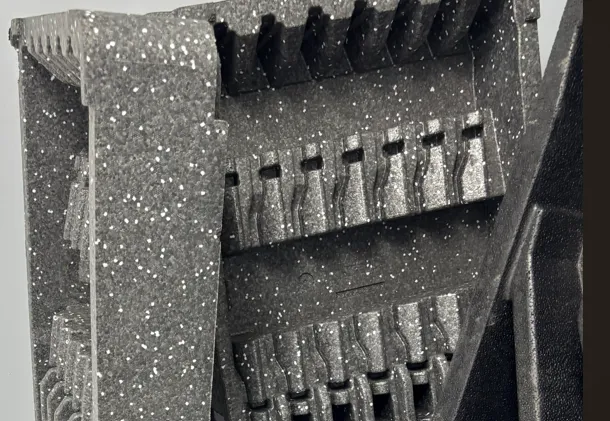
EPP is commonly found in automotive dunnage, playground flooring, and many other places. EPP is incredibly strong. It is so strong that many companies use it to make bumper cores. When the bumper of your car absorbs an impact, that’s EPP doing its job.
Expanded Polystyrene
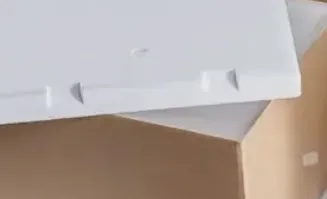
EPS is everywhere. From foam cups to restaurant take-home boxes to appliance padding and packaging inserts, you probably see it day in and day out.
Expanded Polyethylene
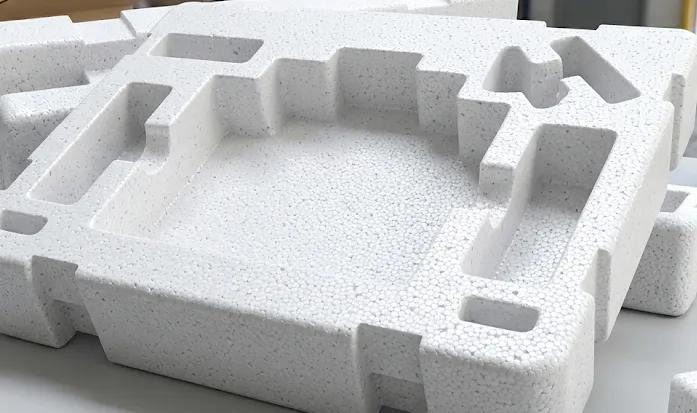
EPE is used everywhere else. When you buy computer parts or circuit boards, the cushions are made of EPE. Packaging inserts for fragile items are often made from EPE.
Where are all of these products found?
There’s one place you can find all of these products: landfills. According to Litter Free Virginia, EPS alone accounts for an estimated 30% of trash volume in US landfills alone. The actual real-world number is a hotly debated topic, but it detracts from the point.
All of these foams are lightweight and, in theory, highly recyclable. Their low density changes the calculus. They contain so much air that they are difficult to recycle profitably. Often, they wind up taking more than their fair share in the landfill instead (even if the actual number is lower than Litter Free Virginia’s estimate).
How can you recycle EPP, EPS, and EPE with Diaz?
Here at Diaz, we encourage teams to recycle low-density materials. As you might already know, we’ve partnered with Global Pak to recycle FIBC bags. We also offer foam recycling solutions for EPP, EPS, and EPE.
As mentioned earlier, these products present recycling challenges due to their lack of density. They are lightweight and easy to use for a ton of different purposes. Their composition is often 95% air or more. To address this, we’ve partnered to help companies acquire and install foam densifiers.
A densifier is exactly what it sounds like. With a densifier, air can be removed from these products. They can then be processed and recycled into new materials.
Conclusion
If you’re dealing with a large volume of foam materials, give us a call. We provide consultations and comprehensive audits to solve these problems. Companies who install densifiers often see a return on investment (ROI) within six months.
Think about that. Within six months, your company can be saving money and the environment. Book a call with us today and build a better tomorrow.